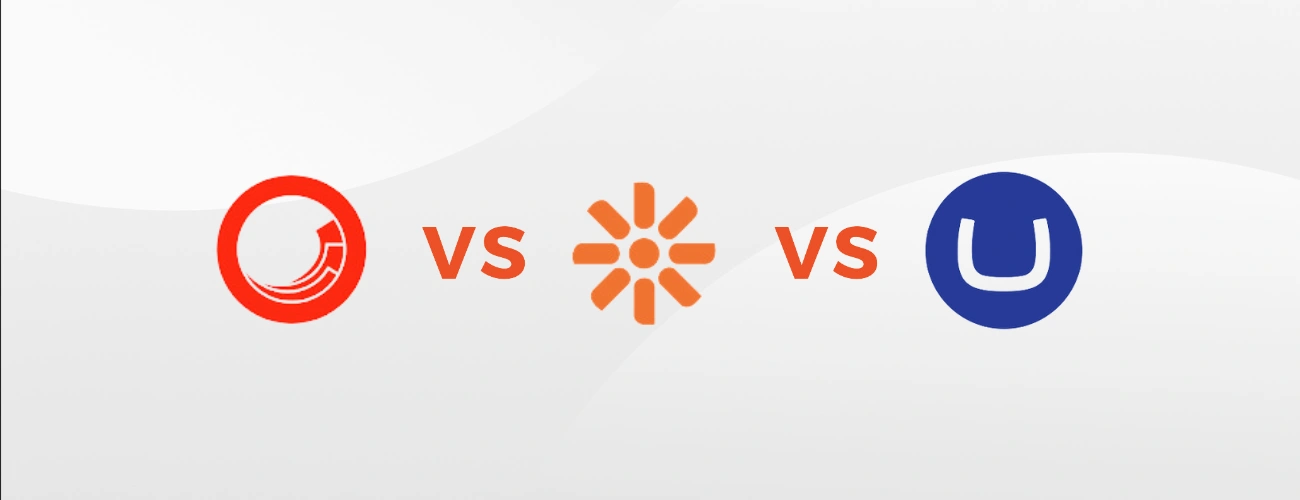
Comparing Kentico vs Sitecore vs Umbraco
Confused between Kentico, Sitecore, and Umbraco? Here’s a guide on Kentico vs Sitecore vs Umbraco. Read till end and find out more.
Development partner. Read and find out.
Choosing the right content management system (CMS) is crucial for your business's digital success.
With numerous options available, it can be challenging to find the perfect fit.
In this blog, we’ll compare three popular CMS platforms: Kentico, Sitecore, and Umbraco. Each offers unique features and benefits, catering to different business needs and budgets.
Whether you’re a small business owner looking for a cost-effective solution, a developer seeking flexibility, or an enterprise in need of advanced capabilities, understanding the strengths and weaknesses of these platforms will help you make an informed decision.
Let's dive into the Kentico vs Sitecore vs Umbraco showdown and find out which CMS is right for you.
Kentico is a powerful digital experience platform (DXP) that combines content management, digital marketing, and e-commerce capabilities into a single, integrated solution. It is designed to help businesses create, manage, and optimize their digital presence across multiple channels.
Kentico's flexibility and scalability make it suitable for businesses of all sizes, from small startups to large enterprises. The platform supports multi-channel content delivery, ensuring a consistent user experience on websites, mobile apps, and other digital platforms.
With an intuitive interface and robust features, Kentico development simplifies the management of complex digital environments. It offers advanced personalization options, marketing automation, and seamless integration with third-party systems, making it a comprehensive solution for modern digital needs.
Kentico offers flexible pricing models to accommodate different business needs. Pricing typically starts in the mid-range, making it accessible for small to medium-sized businesses, while still providing the advanced features needed by larger enterprises.
Sitecore is a leading digital experience platform (DXP) renowned for its powerful content management and digital marketing capabilities. It enables businesses to create, manage, and optimize personalized digital experiences across various channels, including web, mobile, and social media. Sitecore's advanced features and robust architecture make it a popular choice among large enterprises and organizations with complex digital needs.
Sitecore's core strength lies in its ability to deliver highly personalized content to users based on their behavior, preferences, and interactions. This ensures a tailored and engaging user experience, driving higher engagement and conversion rates. Additionally, Sitecore's integration capabilities allow seamless connectivity with various third-party systems, such as CRM and ERP solutions, enhancing its functionality and versatility.
The platform's scalability and flexibility make it suitable for businesses looking to grow and adapt to changing market demands. With Sitecore, organizations can efficiently manage large volumes of content, execute sophisticated marketing campaigns, and gain valuable insights through comprehensive analytics.
Sitecore is positioned at the high end of the pricing spectrum, reflecting its enterprise-level capabilities and extensive feature set.
Umbraco is a flexible and user-friendly open-source content management system (CMS) that is highly regarded for its simplicity and ease of use. It allows businesses to create and manage their websites effortlessly, providing a smooth and intuitive content editing experience. Umbraco is built on the .NET framework, making it a popular choice among developers who appreciate its extensibility and seamless integration capabilities.
One of Umbraco’s standout features is its open-source nature, which means it is free to use and benefits from a large and active community. This community contributes to the continuous improvement of the platform, offering a wide range of plugins and extensions to enhance its functionality. Umbraco’s flexibility allows it to cater to various business needs, from simple websites to complex web applications.
The platform is known for its strong emphasis on user experience, both for content editors and end-users. Its clean and intuitive interface makes it easy for non-technical users to create, edit, and publish content. Additionally, Umbraco offers robust scalability, making it suitable for businesses of all sizes, from small startups to large enterprises.
Umbraco is known for its cost-effectiveness, particularly due to its open-source nature. It provides a free core CMS, with optional paid services and support.

When choosing a content management system (CMS) for your business, it's essential to compare key features and capabilities. Below is a detailed comparison table of Kentico vs Sitecore vs Umbraco to help you make an informed decision.
| Criteria | Kentico | Sitecore | Umbraco |
|---|---|---|---|
| Platform | All-in-one Digital Experience Platform (DXP) | Digital Experience Platform (DXP) | Open-source CMS |
| Ease of Use | User-friendly with intuitive interface | Moderate complexity, powerful features | Highly user-friendly, simple interface |
| Pricing | Mid-range to high, depending on features | High-end, enterprise-level pricing | Free (open-source), with optional paid services |
| Personalization | Advanced personalization capabilities | Industry-leading personalization features | Basic personalization, extendable |
| Scalability | Highly scalable for businesses of all sizes | Extremely scalable for large enterprises | Scalable, suitable for small to large websites |
| Integration | Seamless integration with third-party systems | Extensive integration capabilities | Flexible integrations, especially with .NET |
| Support | Comprehensive support and resources | Extensive support with premium services | Community-driven support, optional paid support |
| Flexibility | Highly customizable and extendable | Highly flexible and customizable | Very flexible and customizable |
| Development | Built on .NET, easy for .NET developers | .NET based, robust development environment | Built on .NET, developer-friendly |
| Community | Strong community and professional support | Large, active user and developer community | Large, active open-source community |
| E-commerce | Robust e-commerce features | Advanced e-commerce capabilities | Basic e-commerce, extendable through plugins |
Let’s start with the first factor of Kentico vs Sitecore vs Umbraco, ease of use.
Kentico offers a user-friendly interface with drag-and-drop functionality, making it easy for non-technical users to manage content.
Sitecore, while powerful, has a steeper learning curve due to its extensive features.
Umbraco is known for its simplicity and ease of use, making it an excellent choice for beginners and small businesses.
Kentico provides mid-range to high pricing, suitable for businesses seeking robust features without breaking the bank.
Sitecore is at the high end of the pricing spectrum, reflecting its enterprise-level capabilities.
Umbraco is free to use as an open-source platform, with optional paid services for additional support and features.
Kentico offers advanced personalization options, enabling businesses to deliver tailored experiences.
Sitecore leads in this area with industry-leading personalization features, allowing for highly customized user interactions.
Umbraco provides basic personalization, which can be extended through additional plugins and custom development.
Kentico is highly scalable, suitable for businesses of all sizes.
Sitecore excels in scalability, making it ideal for large enterprises with complex needs.
Umbraco is also scalable, catering to both small websites and large-scale applications.
Kentico integrates seamlessly with various third-party systems, enhancing its functionality.
Sitecore offers extensive integration capabilities, supporting a wide range of applications and services.
Umbraco is flexible in integration, particularly strong with .NET-based applications.
Kentico provides comprehensive support and resources, ensuring users have access to the help they need.
Sitecore offers extensive support with premium services, ideal for enterprises.
Umbraco benefits from a large, active community offering community-driven support, with optional paid support available.
Kentico is highly customizable and extendable, fitting various business needs.
Sitecore is also highly flexible, supporting extensive customization.
Umbraco stands out for its flexibility, especially for developers looking for a customizable platform.
All three platforms—Kentico vs Sitecore vs Umbraco—are built on the .NET framework, making them familiar and accessible to .NET developers. Each offers a robust development environment, but Umbraco is particularly noted for its developer-friendly nature due to its open-source roots.
Kentico has a strong community and professional support.
Sitecore boasts a large, active user and developer community.
Umbraco has a large open-source community that actively contributes to its development and offers extensive peer support.
Kentico includes robust e-commerce features out-of-the-box.
Sitecore provides advanced e-commerce capabilities, suitable for complex online stores.
Umbraco offers basic e-commerce functionality, which can be extended through plugins and custom solutions.
By understanding these key differences and strengths, you can choose the platform that best suits your business needs.
Choosing the right CMS—whether it's Kentico, Sitecore, or Umbraco—depends on your specific business needs, budget, and technical requirements. Here are some key factors to consider when making your decision:
At DotStark, we specialize in delivering top-notch Kentico solutions tailored to meet your unique business needs. As a leading Kentico development company, we bring years of expertise and a deep understanding of the platform to ensure your project’s success.
Partner with DotStark, the trusted Kentico development company, to elevate your digital presence. Contact us today to discuss your project and discover how we can help you achieve your goals with Kentico. Let’s build something amazing together!
Choosing the right CMS—Kentico, Sitecore, or Umbraco—depends on your specific business needs, budget, and technical requirements. Each platform offers unique benefits, from Kentico’s balanced features and mid-range pricing to Sitecore’s enterprise-level capabilities and Umbraco’s cost-effective, open-source nature. Evaluate your goals and choose the best fit to enhance your digital presence.
Yes, Umbraco is scalable and can handle both small and large-scale websites, making it suitable for businesses of various sizes.
Evaluate your business size, budget, customization needs, ease of use, integration requirements, and digital marketing goals to choose the right CMS—Kentico, Sitecore, or Umbraco—that best fits your needs.
Kentico integrates seamlessly with various third-party applications such as CRM, ERP, and marketing automation tools, enhancing its functionality and flexibility.
Umbraco is ideal for small to medium businesses due to its open-source nature and cost-effectiveness. Kentico also suits SMEs with its balanced pricing and robust features.
Yes, Sitecore excels in digital marketing with its industry-leading personalization and marketing automation features, making it ideal for businesses with complex marketing needs.
Kentico offers a robust CMS, digital marketing tools, e-commerce capabilities, advanced personalization, and seamless integration with third-party systems.
Kentico is a comprehensive DXP with mid-range pricing, Sitecore offers advanced enterprise-level features at a higher cost, and Umbraco is an open-source, cost-effective CMS known for its simplicity and flexibility.
Umbraco offers community-driven support with optional paid support plans, providing professional assistance and advanced technical support.
Post-launch support is essential to address any issues that arise after the project is live. It includes regular updates, bug fixes, and performance optimizations, ensuring your Kentico solution remains functional and up-to-date.
Kentico is a comprehensive DXP with mid-range pricing, Sitecore offers advanced enterprise-level features at a higher cost, and Umbraco is an open-source, cost-effective CMS known for its simplicity and flexibility.

With over 15 years of experience in software development and technology leadership, Pawan Sharma specializes in designing and delivering scalable, high-performance digital solutions. With expertise in modern web technologies, cloud platforms, AI-driven applications, and enterprise software development, Pawan has successfully led cross-functional teams through the complete software development lifecycle. Passionate about innovation, clean architecture, and emerging technologies, Pawan is dedicated to building robust solutions that enhance user experiences and help businesses achieve their digital transformation goals.
Follow on LinkedIn